

How to Ride the Mauritania Iron Ore Train (2026 Update)
Want to ride Mauritania’s Iron Ore Train? Find out when to go, what to expect, and key tips for an epic adventure. Get ready for the ride!
Contents
- What you will find in this guide
- What is Mauritania’s Iron Ore Train?
- The Reality for 2026:
- How to Ride the Iron Ore Train in Mauritania
- Ore wagons in 2026: risks + what not to do
- My Experience Riding the Iron Ore Train
- Tips: Getting ready for the Iron Ore Train in Mauritania
- What to pack: Checklist
- Where to board: Choum or Zouerat?
- Alternatives: Nouadhibou to Zourat Journey.
- Journey Duration: How Long is the Trip?
- Roadmap: Getting to Zouerat or Choum from Nouakchot or Atar.
- Departure Schedule for the Iron Ore Train
- Safety: Is Riding the Iron Ore Train Safe in Mauritania?
- Solo Travellers: Can You Ride Alone?
- When to Go: The best time to Ride the Iron Ore Train
- Tips for Sleeping Comfortably.
- How Long is the Iron Ore Train?
- How Fast Do Iron Ore Train Go?
- What travelers report about ore wagons (2026)
- The 2026 Modernization Project
- Sources
What you will find in this guide
- Up to date information from 2026 (We follow local guides and travellers reports to try to keep our guide updated).
- The different locations that you can on board the train.
- Packing essentials for riding the Iron Ore Train
- My own experience travelling in Mauritania and taking the Iron Ore train.
- Frequently asked questions about the ride.
In 2026, riding the Mauritania Iron Ore Train is still one of the world’s wildest journeys, but it’s also more confusing than it used to be. The key thing to understand is simple: the official way to travel is in the passenger carriage, while riding in the open ore wagons is not authorized and enforcement can vary by place and day. This guide is here to help you decide the best option for your trip, plan the route (Zouérat or Choum), pack the right gear for iron dust and cold nights, and understand what conditions travelers have been reporting recently, based on my own ride in October 2023 and updated information as the railway upgrade moves forward.
If you are interested on my full travel guide in Mauritania, you can read my post here.
What is Mauritania’s Iron Ore Train?
Mauritania’s Iron Ore Train is one of the longest and heaviest trains in the world, often stretching +2 km. It carries iron ore from the mining town of Zouerat in the Sahara to the port city of Nouadhibou on the Atlantic coast.
It runs every day, and it’s a key part of Mauritania’s economy, but it has also become a legendary adventure for travellers.
Yes; if you travel in the official passenger carriage. What is not authorised is riding in the open ore wagons. In late 2024 and throughout 2025, SNIM published stronger warnings against “unauthorised desert excursions” and has taken action against tour operators who promote travelling in the ore hoppers. Because enforcement can vary by location and day, always check locally before you plan your trip.
The Reality for 2026:
Passenger Cars: SNIM provides official passenger carriages managed by SOMASERT. This is the only legal way to travel.
The Ore Wagons: While many still “hop” the Wagons, it is technically illegal. If you try to board at the main Zouerat station, police will likely force you into the passenger wagon.
Pro Tip: Adventurous travelers now tend to board at smaller sidings or during the stop in Choum to avoid official scrutiny. Therefore, it is advisable to check with local guides about the situation and arrange this activity through them.

How to Ride the Iron Ore Train in Mauritania
This is not a normal train journey. There is no tourist timetable, plans can change fast, and conditions are harsh. Expect waiting and last-minute changes. Arrive with time to spare, ask locally about the latest situation, and be ready for delays. The train runs on “mining time”, not on a predictable public schedule.
For the classic experience and best scenery, most travellers aim for Zouérat -> Nouadhibou (longer ride, higher chance of sunset + sunrise). However, Choum -> Nouadhibou is shorter and more manageable, but you will spend more time riding at night.
If the sky is clear, the desert night can be unreal: stars, silence, and a feeling of being far away from everything. Keep your camera protected from dust, and only take it out when you are ready to shoot.
Let me elaborate on my own experience so you can be ready for this unique adventure.
Ore wagons in 2026: risks + what not to do
For years, riding in the open ore wagons was the “legendary” version of this trip. In 2026, this has changed due to SNIM’s legal crackdown on “unauthorized excursions.”
- Zouérat (main station): travellers report stricter control. Police and SNIM staff may direct foreigners toward the official passenger carriage (run through SOMASERT).
- What is valid today can change tomorrow: what worked for someone else last month may not work today. Avoid planning your route around assumptions.
- Choum : To experience the ore wagons, most independent travelers now take a 4×4 to Choum. The train stops here briefly, and the lack of a formal station platform makes it easier to hop into the wagons.
- Safety: the ore wagons expose you to iron dust, cold wind, and serious injury risk. A slip, poor visibility, or a wrong step near a moving train can be catastrophic.
- What not to do: don’t attempt dangerous boarding, don’t move along wagons while the train is moving, and don’t rely on social media “tips” over local reality.
If you are determined to include this experience in your itinerary, the safest approach is to get current local advice (check with Mauritania operators and experts on the terrain) and be prepared to take the passenger carriage instead if conditions or enforcement make it necessary.
My Experience Riding the Iron Ore Train
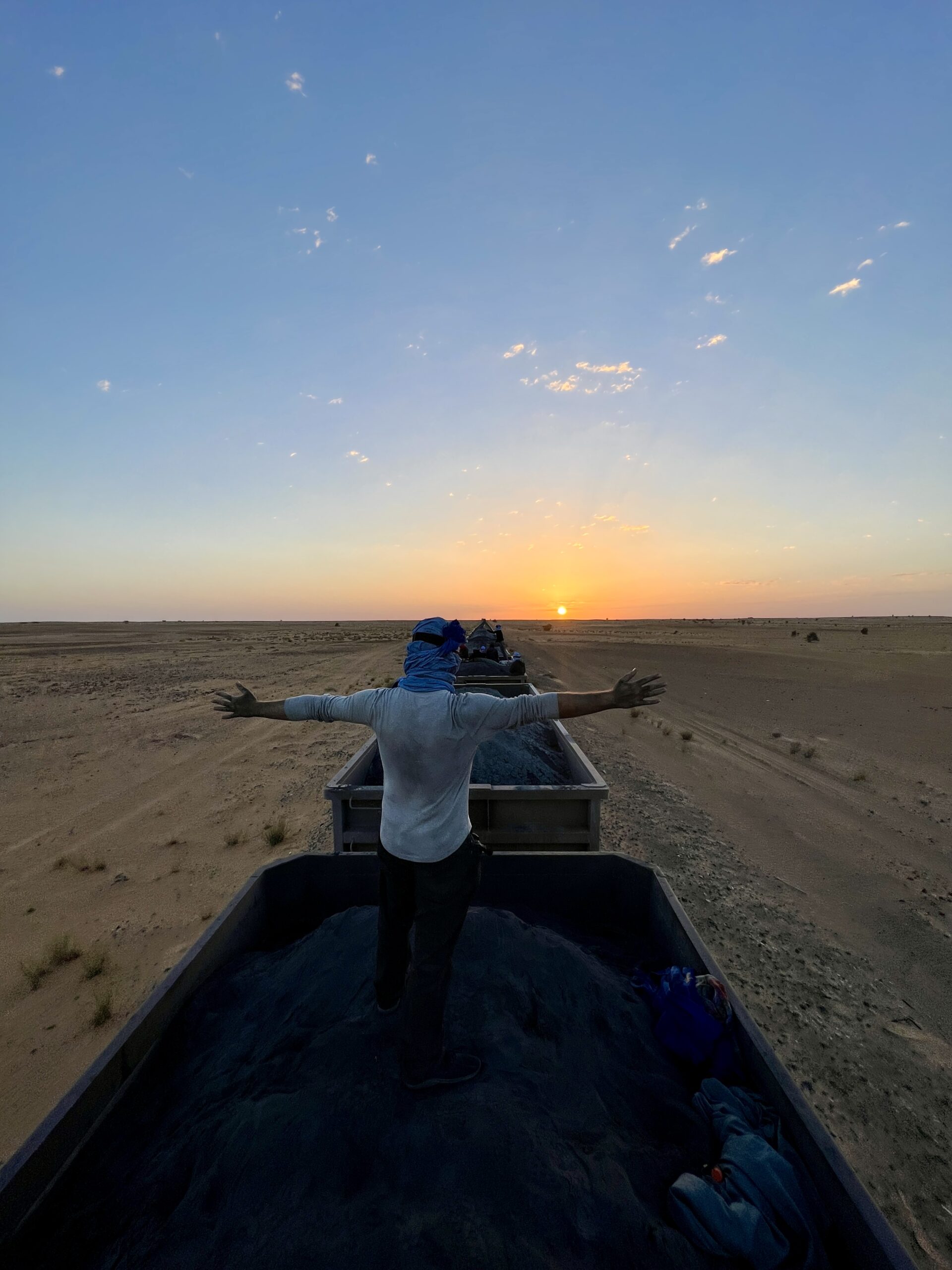
I rode the Iron Ore Train in October 2023. And my first advise: It’s important to be mindful of your diet 24 hours before you take the train, as there are no toilets onboard. I chose to board the train in Choum, which has its pros and cons. The journey was shorter (around 14 hours), but we spent most of the time traveling at night. Before heading to Choum, we stopped in Atar, the only nearby town with a small supermarket where you can buy water and a few snacks for the ride. Then, we headed to Choum to catch the train. We had a local contact who informed us when the train left Zourat, giving us 5 hours to reach Choum (it takes around 5-6 hours from Zouerat to Choum).
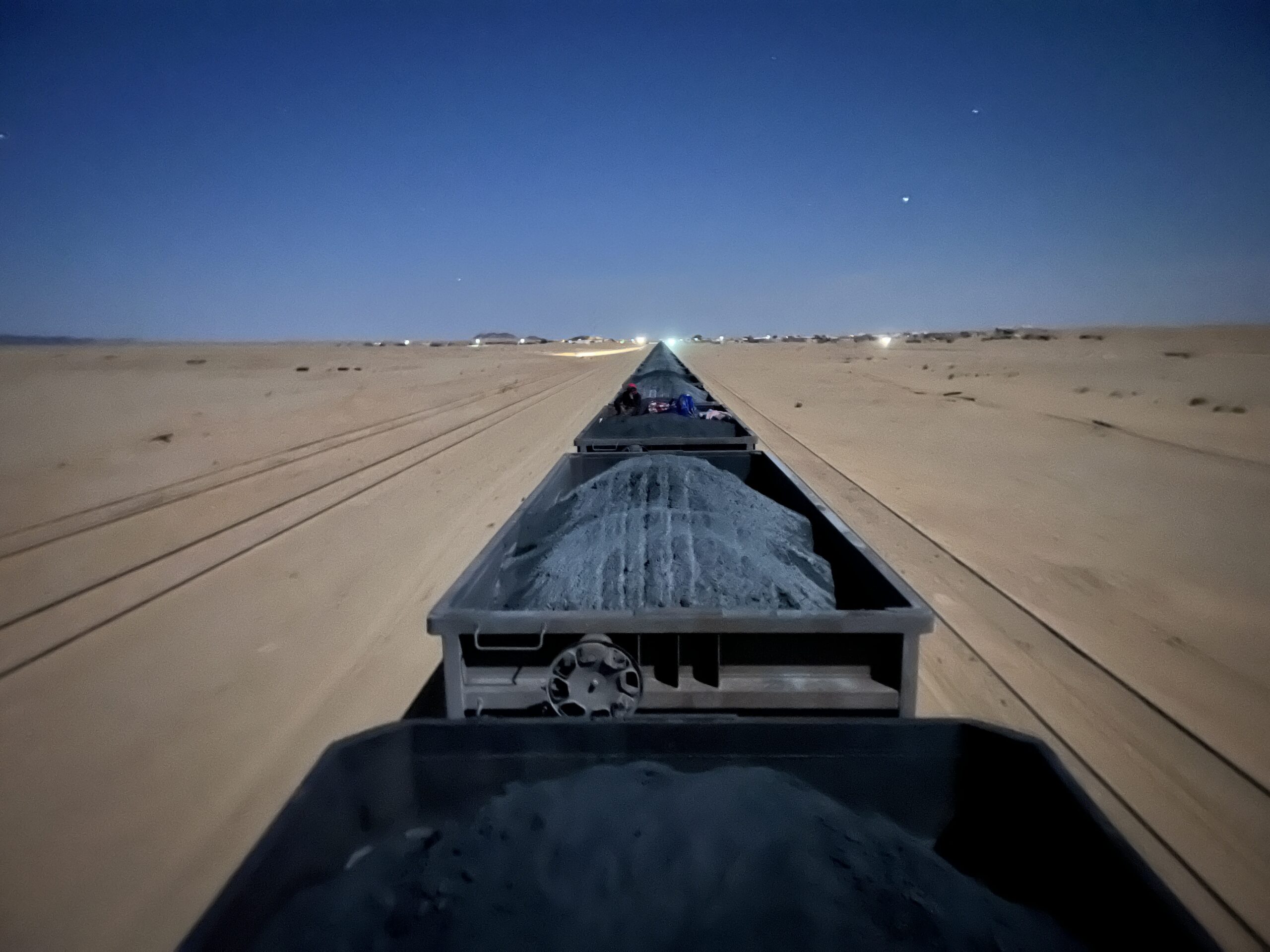
We arrived in Choum before sunset and found some wagons stopped there where we could practice climbing to the top while there was still daylight. The train arrived around 8 PM, and it was already dark. Our local driver took us to the front wagons by car (keep in mind that the train is 2 kilometers long). At that moment, we realized that local people also use the train for crossing the country, so the first two wagons were already occupied by locals.
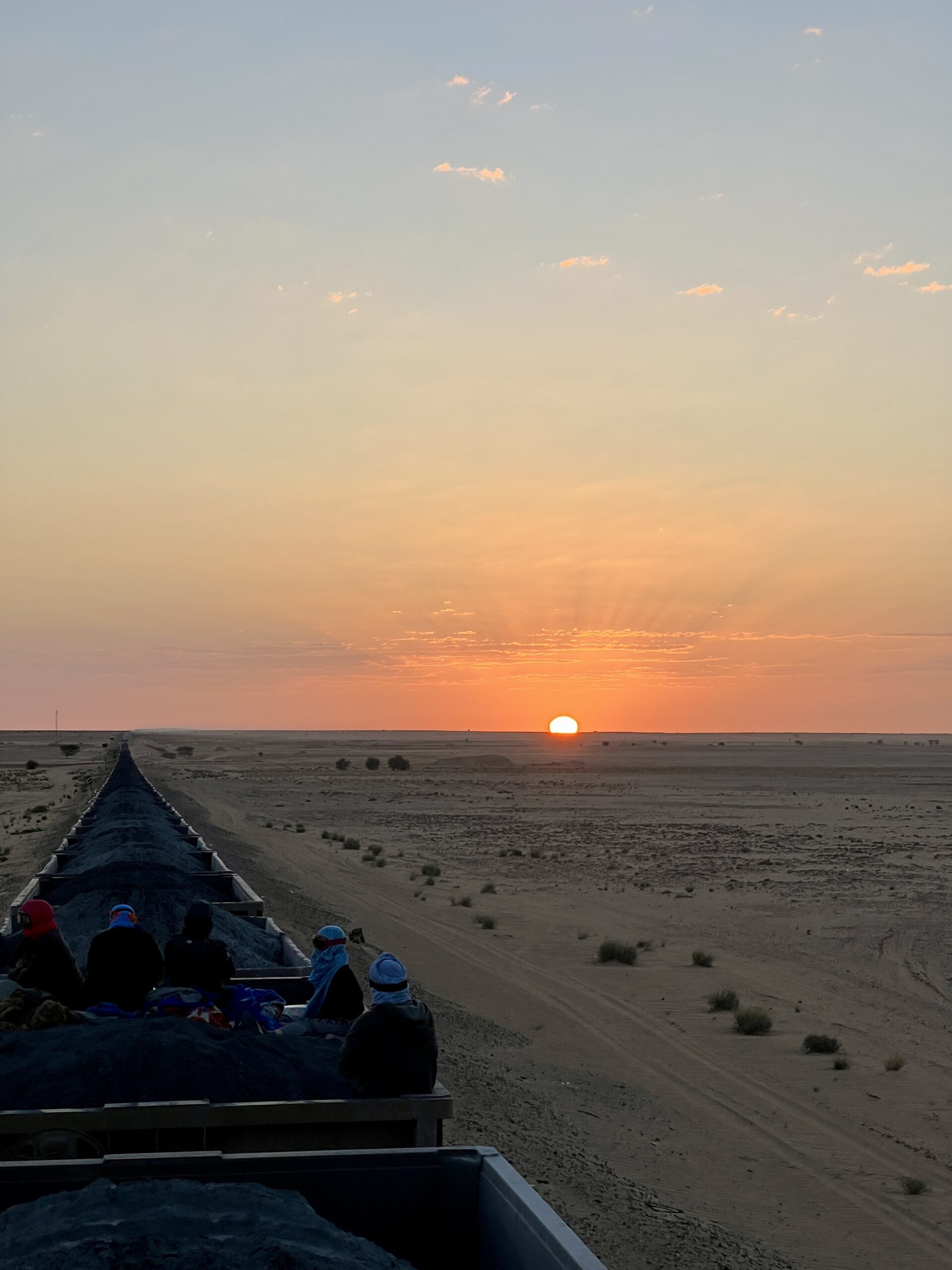
I would recommend a maximum of 5-6 people per wagon to have some freedom of movement during the ride. We climbed to the top and, after a few minutes, the train started its journey. We set up our bags in one corner, brought a mat for sleeping, and some blankets. After the initial excitement, we decided to sleep.
I managed to sleep a few hours, and the rest of the time, I lay awake, observing the stars and the desert; a unique view from the train. We also set our alarms for sunrise.
As the sunrise began, we started taking photos and videos. We still had 4 hours of daylight left, and at some point, when reaching the coast, there was a corner where we could appreciate the huge amount of wagons and the length of the train.
Finally, before arriving at the port of Nouadhibou, the train stopped near the city where we could get off. Our fixer was waiting for us and took us to the city to shower at the hotel. By the end of the journey, all our clothes, faces, and backpacks were covered in iron dust. Some of our clothes were irreparable.
Tips: Getting ready for the Iron Ore Train in Mauritania

What to pack: Checklist
Try to keep your backpack as light as possible, and remember that it may become extremely dirty after the ride. Expect iron ore to get on every part of your body and potentially ruin your clothes. Bring old clothes that you don’t mind getting dirty. Cover your backpack with plastic bags to prevent it from getting dirty, and avoid bringing nice backpacks.
- Dress for the Desert: The Mauritanian desert can be unforgiving, with scorching temperatures during the day and chilly nights. Pack lightweight, breathable clothing to stay comfortable in the heat and bring layers for cooler evenings and nights. It is important to cover your head during the day; you can buy a local Tuareg turban or a hat/hoodie.
- Blankets: As nights can get cold in the desert, you will have time in Atar to purchase some blankets. For added comfort, consider bringing an old sleeping bag or extra layers of clothing.
- Stay Hydrated: Dehydration is a real concern in the desert, so be sure to bring an ample supply of water to keep yourself hydrated throughout the journey.
- Protect Against the Sun: Don’t forget sunscreen. The desert sun can be intense, so pack sunscreen, sunglasses, and a scarf/cap/hat/wide-brimmed hat to shield yourself from harmful UV rays.
- Protective Gear: Wear protective glasses (like old ski goggles or similar) and a face mask to shield yourself from the dust. Dust will be everywhere, and it’s essential to protect your eyes and respiratory system.
- Pack snacks: In addition to water and sun protection, don’t forget to pack essentials such as snacks (easy-to-eat food, such as protein bars) or any easy food to eat during the ride.
- Headlamp: a flashlight or headlamp for the night. It can be very handy if you board the train at night.
Where to board: Choum or Zouerat?

Taking the train in Choum
Pros: Enjoy a shorter journey, lasting around 14 hours. You’ll travel mostly during the night, avoiding the sun.
Cons: You’ll have only a few hours of sunlight to appreciate the views and take photos, mainly during sunrise. Nights can be very cold and uncomfortable if it’s windy, and you might miss the sunset in the desert.
Taking the train in Zouerat
Pros: Experience the full journey, spending almost 24 hours on the train. You’ll have more daylight time to enjoy the ride, witness the sunset, and catch the sunrise.
Cons: Endure a very long journey (without a toilet), lasting around 20-22 hours. Spending the entire day under the sun with no shade can be uncomfortable.
Alternatives: Nouadhibou to Zourat Journey.
Some people opt to journey from the coast in Nouadhibou to Choum or Zouerat. However, I wouldn’t recommend this direction. The wagons are empty and nearly 2 meters deep, making it difficult to enjoy the views. Therefore, in my opinion, it would be pointless.
Journey Duration: How Long is the Trip?
From Zourat, the journey can last up to 20-22 hours, and from Choum, it’s around 12-15 hours. While the journey from Choum may be more manageable, you’ll spend more hours traveling at night. From Zouerat, be prepared for the desert’s scorching sun.
Roadmap: Getting to Zouerat or Choum from Nouakchot or Atar.
To reach these towns, you’ll need to drive from Nouakchott to the Adrar region, a minimum 6-hour drive. From Atar (your last stop for purchasing water and snacks), you can drive to Choum (2 hours) or Zouerat (4.5 hours). Therefore, I recommend sleeping the previous night before taking the train in Atar or the nearby town of Azougui.
Departure Schedule for the Iron Ore Train
There is no fixed schedule, so it’s better to check with locals. The train journey itself runs every single day of the year. Typically, the train from Zouerat departs between 11 am to 5 pm, reaching Choum in around 4-6 hours, depending on the departure time. I advise arriving at your starting town during daylight to familiarise yourself with the surroundings in case the train arrives at night when there’s minimal light.
Safety: Is Riding the Iron Ore Train Safe in Mauritania?
While hopping on the Iron Ore Train isn’t like boarding a regular passenger train and involves certain risks, with a few precautions, it can be relatively safe. I strongly advise against jumping from one wagon to another during the ride, except perhaps when the train stops and only if you’re skilled enough. The train’s speed can vary between 30 km/h to 60 km/h, so be mindful while walking on top of the wagons near the edges.

Solo Travellers: Can You Ride Alone?
Solo travellers can embark aboard the Train with careful planning and preparation. However, I believe it’s better to ride with a group to enjoy the long hours of the journey more fully.
When to Go: The best time to Ride the Iron Ore Train
The best months for riding the Iron Ore Train are October, November, and end of February to March. January can be very cold and freezing during the night, making it less ideal, despite better daylight times. Avoid riding the train during summer months when the heat is unbearable.
Tips for Sleeping Comfortably.
Take a good blanket, prepare the area for sleeping above the Iron Ore, and if necessary, bring your sleeping bag. Make sure to wear a mask during the journey and cover your eyes for better sleep.
How Long is the Iron Ore Train?
The length of the Iron Ore Train can vary depending on factors such as the number of ore cars and the cargo being transported. On average, the train stretches over two kilometers, making it one of the longest trains in the world.
How Fast Do Iron Ore Train Go?
While the speed of the train can vary, it typically travels at a leisurely pace, averaging around 30 kilometers per hour (18.6 miles per hour) up to 50-60 km/h.
What travelers report about ore wagons (2026)
“In 2026, boarding at the Zouerat terminus has become difficult for those wanting the hopper experience. Guards are instructed to keep tourists off the ore. Most travelers now take a 4×4 to Choum and wait for the train there. If you are determined to ride the ore, wait for the train to settle after it stops; often, the ore wagons are attached/detached several kilometers away from the main passenger platform.“
Embrace the Adventure: Riding the iron ore train is a once-in-a-lifetime experience, so embrace the adventure and be prepared to step out of your comfort zone. Keep an open mind and savor every moment of this extraordinary journey
The 2026 Modernization Project
The $512M Rail Upgrade: The Mauritanian rail network is currently being overhauled. Key updates include:
- Capacity Expansion: SNIM is doubling the capacity of the line to accommodate new mining sites at El Aouj and Atomai.
- New Rolling Stock: Expect to see newer, more efficient locomotives and wagons.
- Solar Power: A new 12 MW photovoltaic solar plant is being integrated into the infrastructure, reflecting a shift toward greener mining operations.
- Increased Surveillance: With higher industrial output comes increased security. Travelers should expect more patrols and stricter enforcement of ‘no-riding’ policies on ore wagons.

Sources
- SNIM – National Industrial and Mining Company (operator)
- UK FCDO travel advice: Mauritania
- U.S. Department of State travel advisory: Mauritania
- France Diplomatie: Mauritania
This guide reflects personal experience; conditions can change quickly. Always verify locally (police/guide) before travel.

Reeally cool experience and great story!!
Thank you!
Regarding local tour operators in Mauritania, we recommend checking online and in specialised travel forums for the most recent recommendations. If you want specific advice, you can contact me directly.